



Process vessels can remain in service for many years, but that does not always mean they continue to suit the needs of a growing brewery.
Changes in production volume, recipes, cleaning requirements and temperature control can gradually expose limitations in older or undersized equipment. In some cases, upgrading a vessel can improve efficiency, increase capacity and make the overall brewing process easier to manage.
So, when should a brewery consider upgrading its process vessels?
Production Capacity Is Becoming a Bottleneck
One of the clearest signs is when existing vessels begin to restrict production.
Fermentation and conditioning can occupy vessels for long periods, so limited tank capacity can quickly create delays elsewhere in the process.
Common signs include:
- Fermentation vessels remaining continuously occupied
- Production schedules becoming harder to manage
- Batches being delayed while waiting for vessel availability
- Demand exceeding practical production capacity
Adding larger vessels or increasing the number of available tanks can help improve throughput and give the brewery greater flexibility.
Temperature Control Is No Longer Consistent
Accurate temperature control is particularly important during fermentation, conditioning and other temperature-sensitive stages of brewing.
If vessels take too long to heat or cool, or struggle to maintain a stable temperature, this can affect both production efficiency and product consistency.
Modern vessels can incorporate heating and cooling surfaces designed around the process itself. Laser-welded pillow plate jackets, for example, can provide effective heat transfer across the vessel surface while remaining integrated into the vessel design.
Improved temperature control can also reduce process times and help vessels become available sooner for the next batch.
Cleaning and Hygiene Are Becoming Harder to Manage

Hygienic design is essential in brewery environments.
As equipment ages, internal surfaces, fittings and pipework may become more difficult to clean effectively. Older vessels may also require more manual cleaning than equipment designed around modern CIP processes.
An upgraded vessel can incorporate:
- Hygienic internal finishes
- CIP spray devices
- Improved drainage
- Hygienic fittings and connections
- Reduced areas where product can collect
These features can make cleaning more consistent and help reduce manual intervention between batches.
Maintenance Requirements Are Increasing
Stainless steel process vessels are designed for long service lives, but repeated maintenance can eventually become a sign that replacement should be considered.
Problems with valves, jackets, insulation, fittings or other components can increase downtime and maintenance costs over time.
If repairs become frequent, replacing the vessel may provide an opportunity to improve the specification rather than simply maintaining equipment that no longer suits the process.
Your Brewing Process Has Changed
Breweries often evolve over time.
New products, changes in batch size, different carbonation methods or revised fermentation processes can all place different demands on process equipment.
A vessel originally designed for storage, for example, may not have the pressure rating, temperature control or fittings required for a new application.
In these situations, a bespoke vessel designed around the current process can often provide a better long-term solution than adapting older equipment.
Planning for Future Growth
It is often better to review vessel capacity before it becomes a serious production constraint.
When specifying new equipment, breweries should consider not only current demand but how production may change in the future.
Factors such as batch size, production frequency, available floor space, cooling capacity and future product ranges can all influence vessel specification.
Planning ahead can make future expansion easier and reduce the risk of new equipment quickly becoming undersized.
Bespoke Brewery Process Vessels from BRITANX
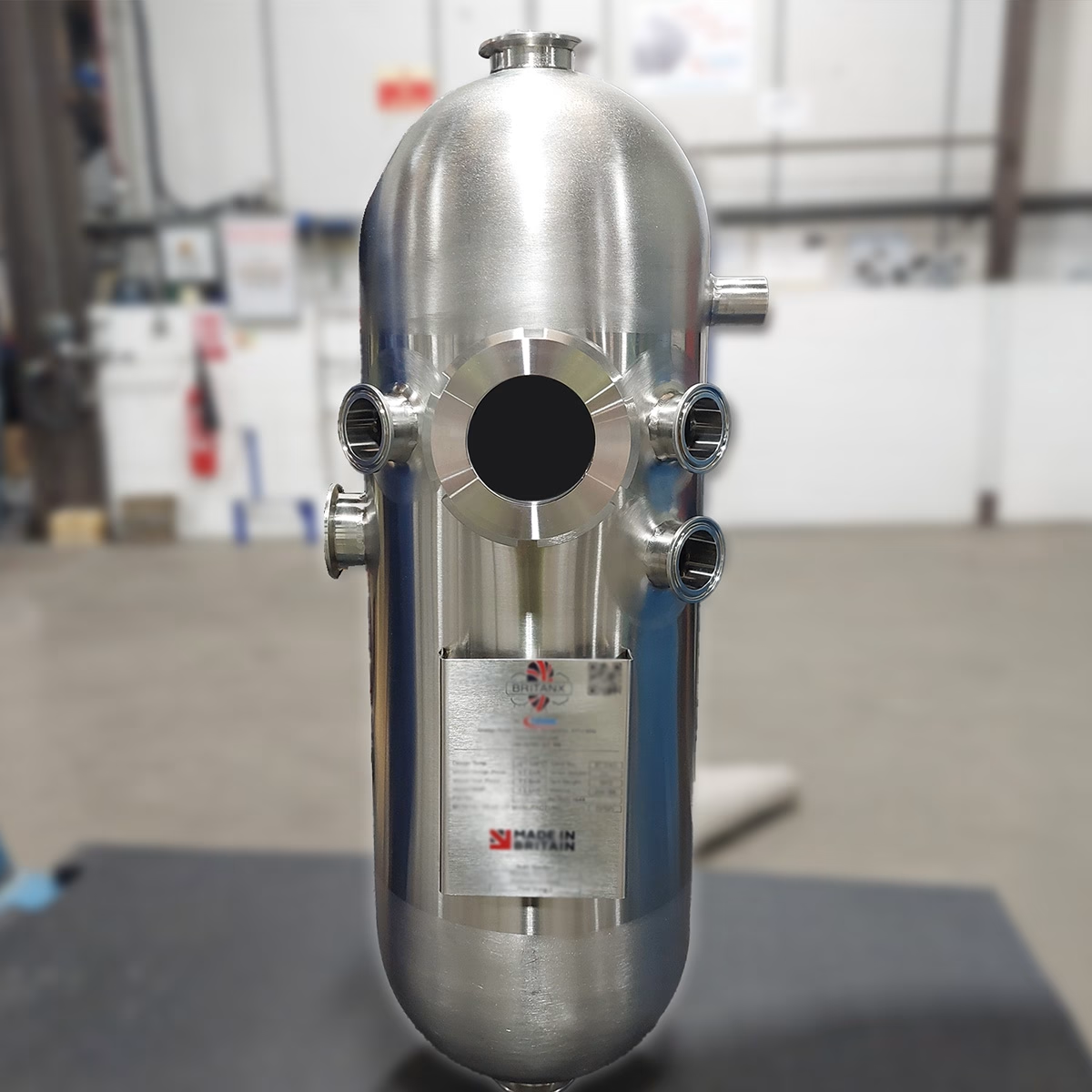
BRITANX manufactures bespoke stainless steel process vessels for food and beverage applications, including mixing, heating and cooling, fermentation, carbonation, buffer storage and product storage.
With in-house fabrication and pillow plate laser welding capability, vessels can be designed around the required capacity, temperature control, pressure rating, fittings and production environment.
Whether replacing ageing equipment or increasing brewery capacity, selecting a vessel designed around the process can help create a more efficient and flexible production system.


