



Choosing the right milk storage system is an important decision for any dairy farm. Whether expanding herd numbers or replacing existing equipment, adequate milk storage capacity is essential for efficient daily operations.
Two common solutions are horizontal bulk milk tanks and vertical milk silos. Both provide refrigerated milk storage, but their different designs offer advantages depending on available space, storage requirements and farm layout.
Understanding the differences between a milk tank vs milk silo can help dairy farmers make an informed investment.
What Is a Bulk Milk Tank?

A bulk milk tank is a refrigerated stainless steel vessel designed to cool and store raw milk before collection.
Typically installed horizontally, these tanks are widely used throughout the dairy industry. They are available in various capacities to accommodate different herd sizes and milk production volumes.
Modern milk tanks incorporate cooling systems, insulation, agitation and automated cleaning to help maintain milk quality.
At Fabdec, our DX-FF dairy tanks are designed for indoor installation, providing reliable milk cooling and storage.
For farms with limited indoor space, our KOOL-STOR outdoor milk tanks provide an alternative.
Advantages of Horizontal Milk Tanks
- Flexible installation: Suitable for indoor or outdoor use, depending on the model.
- Accessible design: Horizontal construction can simplify access for inspection and maintenance.
- Range of capacities: Suitable for smaller farms and larger dairy operations.
- Low-profile options: Useful where building height restrictions prevent vertical installations.
Horizontal milk tanks are particularly practical for farms with sufficient ground space or existing dairy buildings designed around conventional bulk storage equipment.
What Is a Milk Silo?
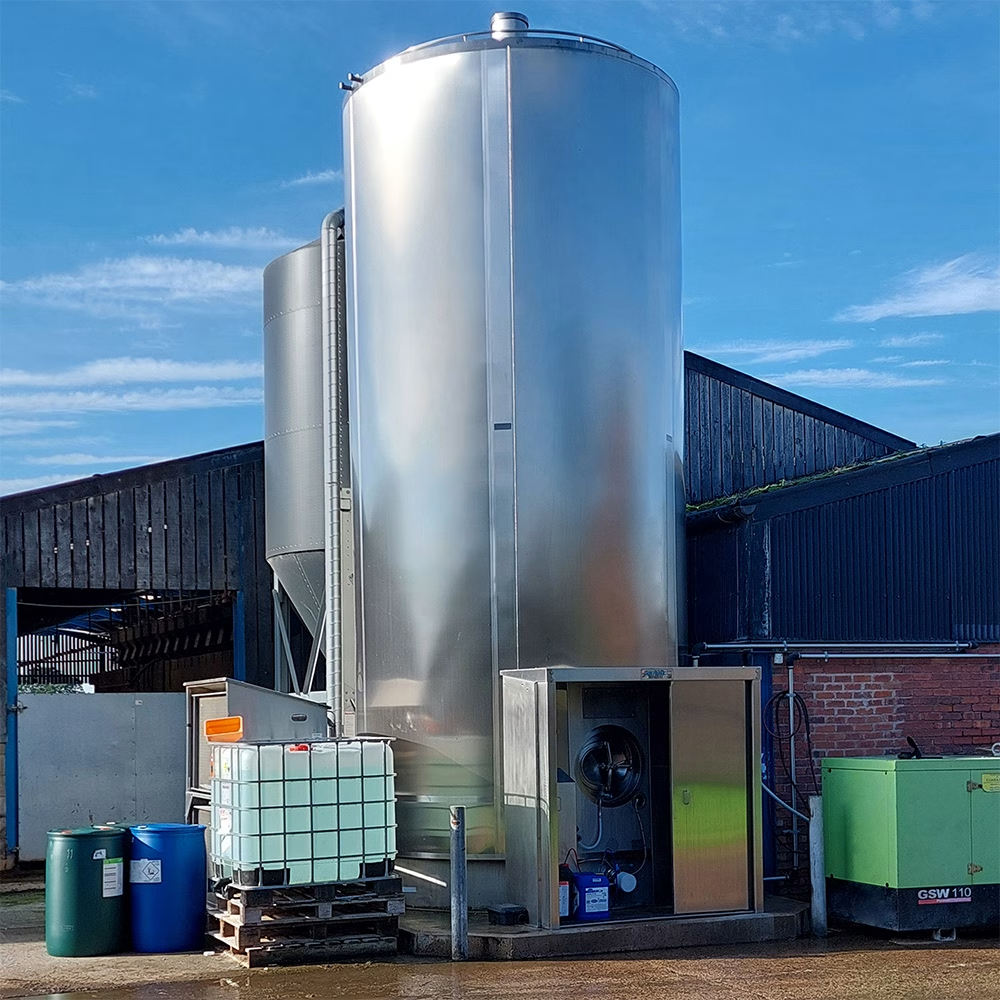
A milk silo performs the same fundamental function as a bulk milk tank but stores milk in a vertical vessel.
Rather than extending horizontally, a silo uses height to provide substantial storage capacity within a relatively compact ground footprint.
This makes milk silos particularly suitable for larger dairy farms or operations where space is limited.
Fabdec’s HI-KOOL dairy silos are designed for high-capacity milk storage, with models ranging from 20,000 to 40,000 litres.
Manufactured from stainless steel, HI-KOOL silos incorporate efficient milk cooling, gentle agitation and programmable cleaning options.
Advantages of Milk Silos
- Space efficiency: Vertical construction reduces the ground area required for high-capacity storage.
- Large capacities: Suitable for farms producing substantial daily milk volumes.
- Outdoor installation: Helps preserve valuable space inside dairy buildings.
- Future expansion: Provides an option for farms planning to increase milk production.
However, silo installation requires sufficient vertical clearance, suitable foundations and appropriate access arrangements.
Milk Tank vs Milk Silo: Key Differences
Although both systems provide hygienic, refrigerated milk storage, there are important differences to consider.
| Feature | Horizontal Milk Tank | Vertical Milk Silo |
|---|---|---|
| Design | Horizontal vessel | Vertical vessel |
| Ground Footprint | Generally larger for comparable capacity | Generally smaller for comparable capacity |
| Installation | Indoor or outdoor, depending on model | Typically outdoor |
| Capacity | Wide range of sizes | Generally higher-capacity applications |
| Height Requirements | Lower-profile options available | Requires greater vertical clearance |
| Typical Applications | Small to large dairy farms | Larger farms and high-volume storage |
How Much Milk Storage Capacity Do You Need?
Storage capacity is one of the most important considerations when choosing between a milk tank and a milk silo.
Farmers should consider daily milk production, collection frequency and any planned increases in herd size.
For example, a farm producing 8,000 litres of milk per day would need at least 16,000 litres of usable storage capacity to accommodate two full days of production without collection.
However, additional capacity may be required to account for collection delays, production fluctuations and future expansion.
A larger farm anticipating significant growth may benefit from a high-capacity milk silo.
Meanwhile, a smaller operation with regular milk collections may find a conventional horizontal tank more practical.
Planning ahead can help avoid costly equipment replacements as milk production increases.
Installation Space and Farm Layout
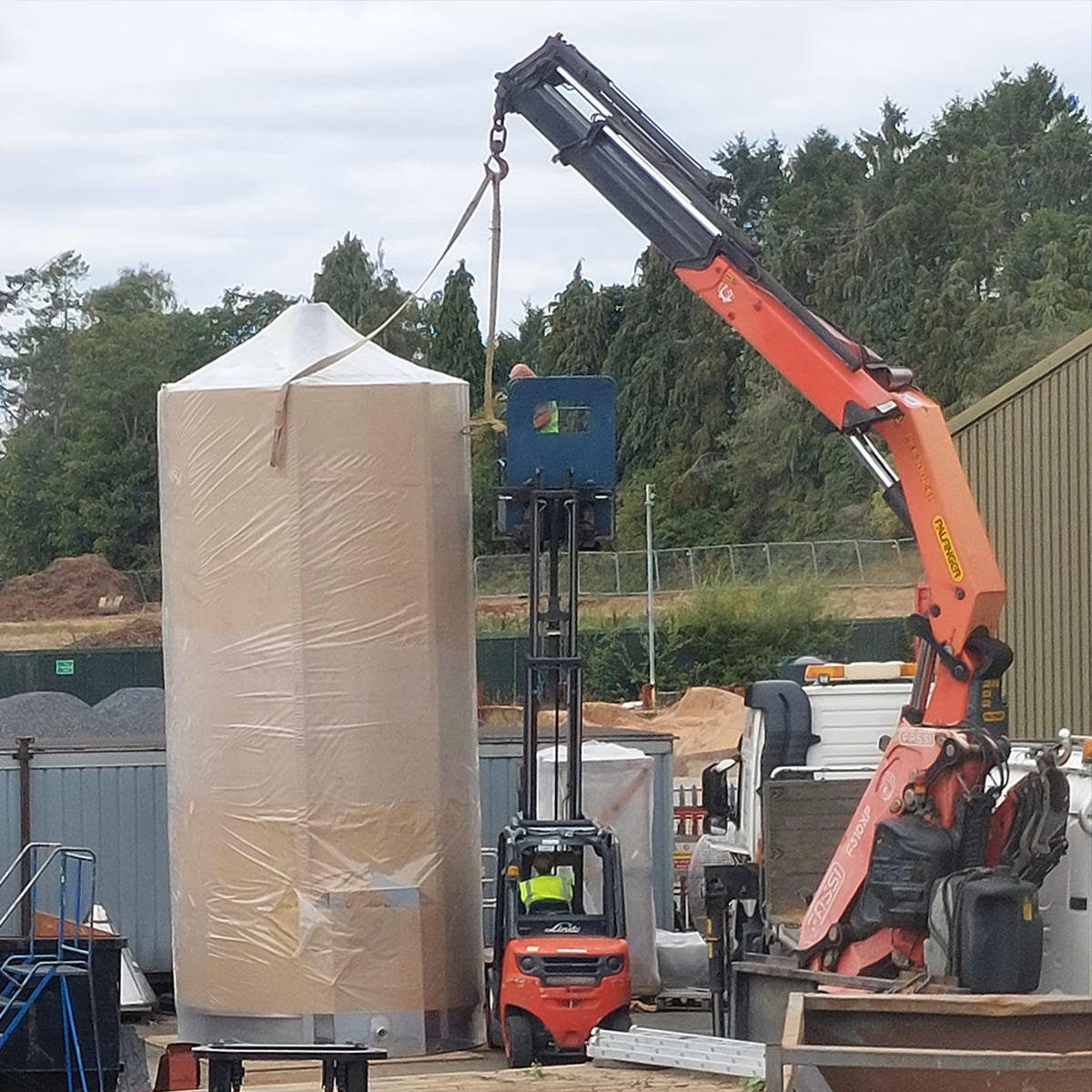
Available space can significantly influence the choice between horizontal and vertical milk storage.
Horizontal tanks require sufficient floor area, alongside access for cleaning, servicing and milk collection.
Indoor installations must also account for doorway dimensions, ceiling heights and existing dairy equipment.
Where indoor space is limited, an outdoor KOOL-STOR tank can provide additional capacity without occupying valuable building space.
Alternatively, a vertical HI-KOOL silo may be suitable where ground space is restricted but sufficient height is available.
However, silo installations require consideration of foundations, access, delivery arrangements and any relevant site restrictions.
Assessing these factors early helps ensure the selected system can be installed and operated effectively.
Does a Milk Silo Cool Milk Differently?
Both horizontal milk tanks and vertical milk silos are designed to cool milk and maintain suitable storage temperatures.
Their cooling performance depends on the system specification rather than simply the vessel’s orientation.
Fabdec’s dairy tanks and HI-KOOL silos incorporate refrigerated cooling technology, with gentle agitation helping maintain consistent milk temperatures.
However, larger storage volumes and different milking arrangements can influence refrigeration requirements.
For high-volume dairy operations, additional milk pre-cooling equipment may also help reduce the cooling load before milk enters the storage vessel.
Ultimately, the refrigeration system should be matched to milk production volumes, incoming milk temperature and the required cooling performance.
Choosing the Right Milk Storage Solution
When comparing a milk tank vs milk silo, the decision should be based on more than storage capacity alone.
Farmers should consider available space, daily production, collection arrangements, installation requirements and future herd expansion.
A horizontal milk tank may offer the most practical solution for farms with sufficient floor space and straightforward installation requirements.
Alternatively, a vertical milk silo can provide substantial storage capacity while making efficient use of available ground space.
Both options can deliver reliable milk cooling when correctly specified and maintained.
Milk Tanks and Silos from Fabdec Dairy Systems
At Fabdec Group, we manufacture stainless steel milk cooling and storage equipment at our facility in Shropshire, UK.
Our Dairy Systems range includes DX-FF indoor milk tanks, KOOL-STOR outdoor tanks and HI-KOOL high-capacity milk silos.
With decades of experience in dairy equipment manufacturing, we support farms looking to improve milk storage, expand production and invest in reliable cooling solutions.
Whether you require a conventional bulk tank or a high-capacity vertical silo, our team can help identify a suitable solution.
Explore our Fabdec Dairy Systems range or request a quotation to discuss your requirements.


