



A process vessel is more than a stainless steel tank. In many production environments, it plays a direct role in how a product is stored, mixed, heated, cooled or prepared before moving to the next stage of manufacture.
Because of this, process vessel design should always be based on the product, the process and the operating environment. A vessel that works well for one application may not be suitable for another, even if the capacity appears to be the same.
From food and beverage production to chemical and pharmaceutical processing, the right vessel design can improve performance, support hygiene standards and help create a more reliable production process.
What is a process vessel?
A process vessel is a stainless steel vessel used to hold, mix, heat, cool or process a product during manufacture. Depending on the application, it may be used as a buffer tank, mixing vessel, jacketed vessel, pressure vessel or specialist production vessel.
Process vessels are used across a wide range of industries, including food, beverage, dairy, chemical and pharmaceutical manufacturing. They can be designed for simple storage, controlled temperature processing, agitation, product transfer or integration into a wider production line.
The design of the vessel depends on what the product needs to do inside it. This includes how the product behaves, how it needs to be handled and what conditions are required during processing.
1. Product and process requirements
The first consideration in process vessel design is the product itself. Before choosing the vessel size, fittings or heating method, it is important to understand how the product behaves during production.
Some products are thin and free-flowing. Others are thicker, more viscous or more sensitive to movement. A sauce, syrup, cream, chemical mixture or pharmaceutical product may each require a different approach to handling, mixing and temperature control.
Key questions include:
- Does the product need to be heated or cooled?
- Does it need to be mixed or gently agitated?
- Is the product sensitive to shear or damage?
- Does it need to be held at a specific temperature?
- Will the vessel be used for storage, processing or both?
- Does the product require hygienic or specialist handling?
Answering these questions early helps ensure the vessel is designed around the real process, rather than simply selected by capacity.
2. Material selection and hygienic design
Stainless steel is commonly used for process vessels because it is strong, durable, corrosion resistant and suitable for hygienic applications. For food, beverage, dairy and pharmaceutical environments, stainless steel also supports cleanability and long-term product safety.
However, the material alone is not the only consideration. The vessel design must also support hygienic operation. This includes the quality of the internal finish, the design of welds, the positioning of outlets and the ability to clean the vessel effectively.
Poorly designed internal areas can create places where product may collect. This can make cleaning more difficult and increase the risk of contamination or production downtime.
A well-designed process vessel should consider:
- Internal surface finish
- Weld quality
- Drainability
- Cleaning access
- Outlet positioning
- Hygienic fittings
- Suitability for CIP where required
For demanding production environments, these details can be just as important as the vessel capacity itself.
3. Capacity, footprint and installation space
Capacity is usually one of the first details discussed when specifying a process vessel. However, volume is only part of the design process.
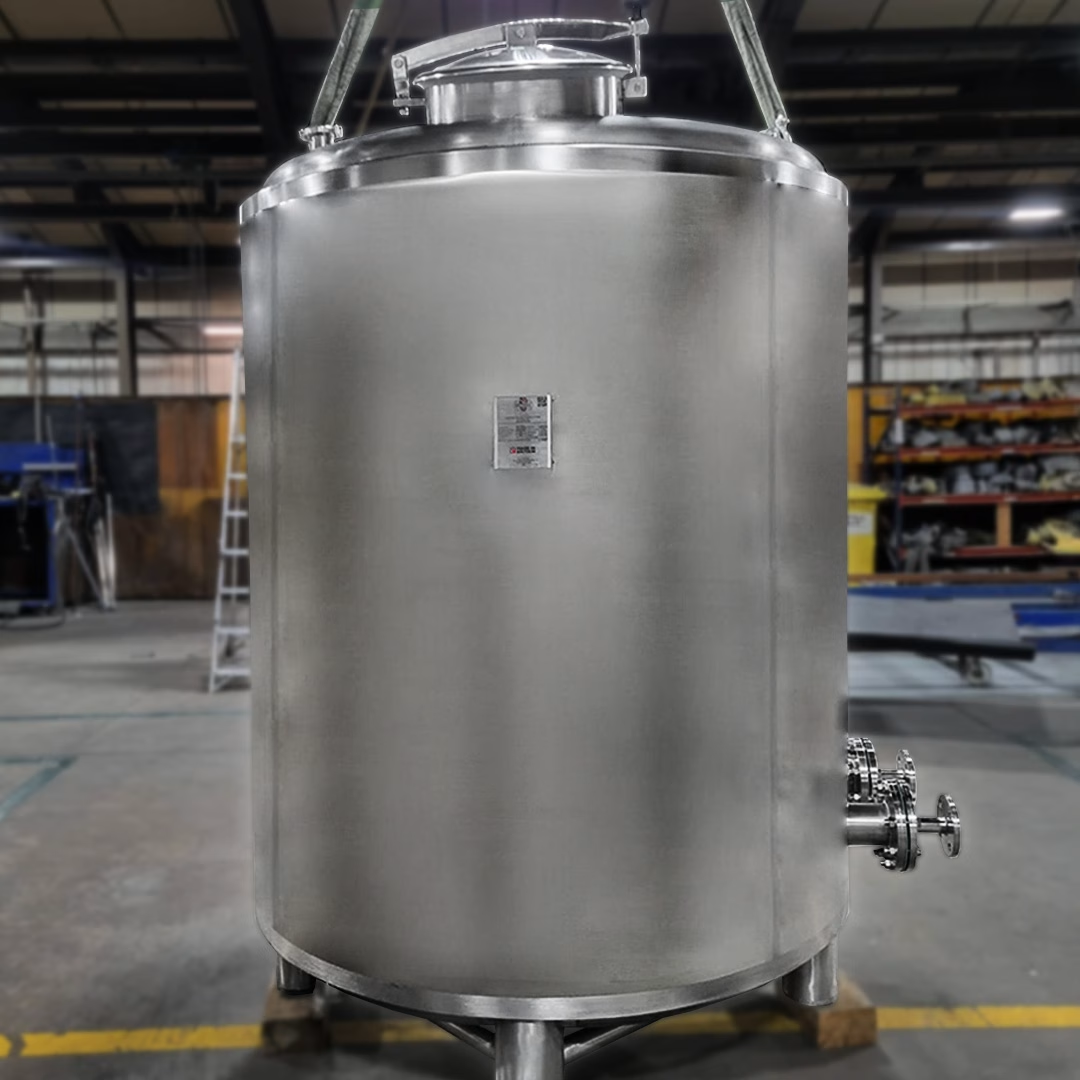
The vessel also needs to fit the available space on site. This can include height restrictions, access through doors, pipework positions, floor layout, service access and the wider production flow around the vessel.
A standard vessel may not always suit these requirements. For example, a site may need a lower vessel due to ceiling height, a narrower vessel because of access restrictions, or a specific outlet position to connect with existing pipework.
Bespoke process vessel design allows these details to be considered from the start. This can help reduce installation issues and create a vessel that works more effectively within the production environment.
The main layout considerations include:
- Vessel height and diameter
- Working capacity
- Access around the vessel
- Leg or frame design
- Outlet and inlet positions
- Pipework connections
- Installation access
- Cleaning and maintenance space
A process vessel should be designed for how it will be used on site, not just how it appears on a drawing.
4. Heating and cooling requirements
Many process vessels need some form of temperature control. This may involve heating, cooling or maintaining a product at a specific temperature during processing.
The right solution depends on the product, the required temperature range and how quickly the temperature needs to change. Some applications may require gentle heating, while others need faster heat transfer or controlled cooling.
Common options include jacketed vessels, internal coils and immersion heaters. Each method has its own benefits depending on the process and the product being handled.
Heating and cooling design can affect:
- Processing time
- Product consistency
- Energy efficiency
- Temperature accuracy
- Product quality
- Cleaning requirements
For applications where temperature control is critical, this part of the vessel design should be considered early. Retrofitting or changing thermal transfer surfaces later can be difficult, costly and disruptive.
5. Agitation and mixing
Agitation is another important part of process vessel design. The type, speed and position of the agitator can all affect product movement and final consistency.
Some products need continuous mixing to prevent separation. Others need gentle agitation to avoid damaging the product. Higher viscosity products may require a different agitator design compared with thinner liquids.
The vessel shape also plays a role. Diameter, base design, baffles and outlet position can all influence how the product moves inside the vessel.
Good agitation design helps support:
- Consistent product quality
- Even heating or cooling
- Reduced settling or separation
- Better batch repeatability
- Improved process control
The agitator should not be treated as an add-on. It should be considered as part of the overall vessel design.
6. Cleaning, access and maintenance
Cleaning and maintenance are essential in most process environments. A vessel may perform well during production, but if it is difficult to clean or maintain, it can create downtime and operational issues.
For hygienic applications, cleanability should be considered at the design stage. This includes access points, manways, spray balls, CIP connections, drainability and the ability to inspect internal surfaces where required.
Maintenance access is also important. Components such as agitators, seals, valves and fittings should be positioned so they can be serviced without unnecessary disruption.
A good vessel design should help reduce avoidable downtime by making cleaning, inspection and maintenance as straightforward as possible.
Key considerations include:
- Access hatches or manways
- CIP compatibility
- Drain points
- Removable components
- Valve access
- Agitator maintenance
- Internal inspection
- Safe working access
The easier a vessel is to clean and maintain, the more practical it becomes in day-to-day production.
7. Fabrication quality and long-term reliability
The quality of fabrication has a major impact on the long-term reliability of a process vessel. Stainless steel vessels are often expected to operate for many years, so the design and build quality need to support long service life.
Weld quality, material selection, finishing, testing and inspection all contribute to the final performance of the vessel. Poor fabrication can lead to hygiene issues, mechanical problems, corrosion risks or premature failure.
For vessels used in demanding production environments, quality should be built into every stage of manufacture. This includes design review, fabrication control, welding standards, pressure requirements where applicable and final inspection before delivery.
A reliable process vessel should not only meet the immediate production need. It should also be robust enough to support future production demands.
Why choose a bespoke process vessel?
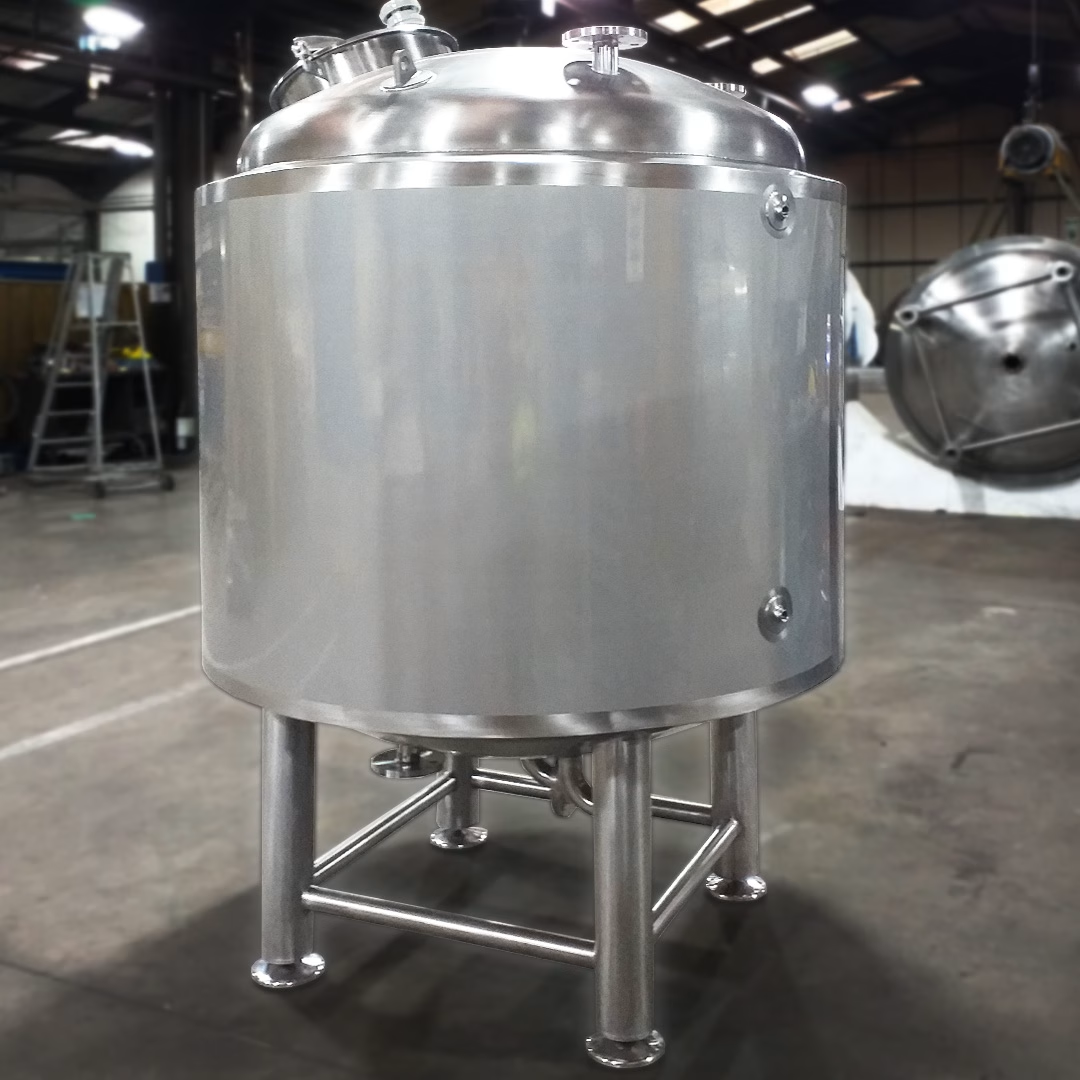
A bespoke process vessel gives manufacturers greater control over how the vessel is designed, built and integrated into their production process.
Rather than adapting the process to suit a standard tank, a bespoke vessel can be designed around the product, site layout, production flow and operational requirements.
This can be especially valuable when dealing with unusual product characteristics, restricted installation spaces, specialist heating or cooling needs, hygiene requirements or specific pipework connections.
Bespoke design can help with:
- Non-standard capacities
- Restricted access or height limits
- Specialist agitation
- Heating and cooling requirements
- Hygienic design
- Custom fittings
- Skid-mounted systems
- Integration with existing equipment
- Future production flexibility
For many manufacturers, the value of a bespoke vessel comes from reducing compromise. The vessel is designed to work with the process from the beginning.
Process vessel design from BRITANX Process
BRITANX Process designs and manufactures bespoke stainless steel process vessels for a wide range of industries, including food, beverage, dairy, chemical and pharmaceutical manufacturing.
Our vessels can be designed around the specific requirements of the product and process, including heating, cooling, agitation, pressure requirements, hygiene considerations and site restrictions.
With in-house design and stainless steel fabrication expertise, BRITANX Process can support projects from initial specification through to completed manufacture. This allows key design details to be considered early, helping create a vessel that is practical, reliable and suited to its operating environment.
Whether you need a mixing vessel, jacketed vessel, buffer tank, pressure vessel or a bespoke stainless steel process solution, our team can help develop a design that fits your production requirements.
Speak to BRITANX Process
Choosing the right process vessel starts with understanding the product, the process and the production environment.
If you are planning a new process vessel or reviewing an existing production setup, BRITANX Process can help you explore the right design for your application.
Contact BRITANX Process to discuss your next stainless steel process vessel project.


